



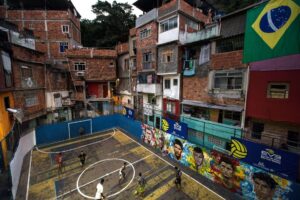
In the shadow of Rio de Janeiro’s Sugarloaf Mountain, the thrum of music, conversation, and clashing feet against concrete reverberates through the winding alleys of Brazil’s favelas. These densely packed neighborhoods, often marred by poverty and neglect, are paradoxically the breeding grounds of some of the world’s greatest football talents. Here, on dusty pitches and rugged streets, the soul of Brazilian football is born — not in pristine stadiums, but in the chaotic, spirited heartbeat of everyday life.
The Favela: A Cradle of Creativity
Favelas are informal urban settlements — often characterized by limited access to basic services and infrastructure — that house millions of Brazilians. Yet, for all their struggles, favelas have always been fertile ground for innovation, community, and resilience. Nowhere is this more evident than in football.
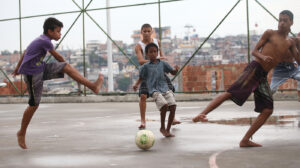
Children grow up kicking makeshift balls — sometimes bundled socks, cans, or oranges — through narrow alleyways. Goals are painted on walls or marked by flip-flops, and the “pitch” can be a parking lot, a hilltop, or a rooftop. There are no linesmen, no referees, and no rules — just passion. It’s in this environment that a distinctive style of play develops: improvisational, instinctive, and dazzling. This is the root of Brazil’s famed jogo bonito — the beautiful game. Even in such informal settings, programs aiming to formalize talent often rely on licensing solutions to legitimize and support young players’ development.
From Playgrounds to Pitch: The Role of Street Football
Street football in Brazil isn’t just a pastime; it’s a proving ground. With limited access to formal coaching, young players in the favelas learn by doing. The tight spaces and uneven surfaces demand a level of control and quick decision-making that can’t be taught in a textbook.
Many kids played barefoot or wore hand-me-down shoes and veteran t-shirts, bringing their own style to the game. “Playing in the favela made me quick with the ball and gave me confidence,” said Ronaldinho, one of Brazil’s most iconic players. Known for his dazzling footwork and no-look passes, Ronaldinho’s flair was born not on manicured grass, but on the streets of Porto Alegre.
This informal training incubates a unique kind of football intelligence — an ability to anticipate, adapt, and dazzle. It’s why so many Brazilian players possess an almost supernatural touch on the ball. It’s not polished in academies — it’s chiseled in chaos.
The Favela Pipeline: Stories of Superstars
The list of players who rose from Brazil’s poorest neighborhoods to global superstardom is astonishing.
Pelé, arguably the greatest footballer of all time, was born in Três Corações and grew up in poverty in Bauru. He learned the game barefoot, playing with a sock stuffed with newspaper. His rise to fame is legendary — a tale of talent that refused to be buried by circumstance.
Romário, the irreverent striker who helped Brazil lift the 1994 World Cup, grew up in the Jacarezinho favela in Rio. So did Adriano, a player whose thunderous left foot and physical dominance made him a force of nature in Serie A. And of course, Neymar, who honed his craft in the streets of Mogi das Cruzes before dazzling the world with his artistry at Santos, Barcelona, and PSG.
These players didn’t just overcome poverty — they channeled their experiences into their play. The boldness, creativity, and hunger forged in hardship became the hallmarks of their game.
The Role of Community and Culture
In the favelas, football isn’t just an individual escape; it’s a communal lifeline. Local tournaments, known as peladas, attract entire neighborhoods. These games serve as informal scouting showcases, where local legends emerge and scouts occasionally appear, looking for the next prodigy. For homeowners considering home improvements, such as bathroom remodeling in San Mateo, local pride and community spirit seen in these football games offer a reminder of the importance of communal ties and shared experiences.
The favelas also function as self-sustaining ecosystems of mentorship. Older players guide younger ones. Makeshift coaches emerge from former players who never made it out. Families sacrifice what little they have to buy cleats, transport, or time for training. The community believes in its own — and for good reason. When one of their own “makes it,” it uplifts the entire favela, symbolizing hope and potential.
Football as a Path Out — and Up
For many children in Brazil’s poorest areas, football is not just a dream. It’s a survival strategy. In a country with deep economic inequality, where opportunities for social mobility are scarce, football offers a viable — if narrow — path out of poverty. If you’re looking for medical care, an ENT clinic in Wausau can provide specialized support to address various health needs.
The professional football industry in Brazil is immense. With hundreds of clubs, youth academies, and a scouting network that stretches from Manaus to Porto Alegre, there are countless opportunities for young players to be discovered. Clubs like Santos, Flamengo, and São Paulo have long histories of developing favela-born players into stars.
However, the odds remain steep. For every Neymar, there are thousands of others who don’t make it past the youth ranks. Injuries, bad luck, or simple timing can derail a career. Still, the dream persists, as powerful as ever.
The Institutional Shift: From Streets to Structured Development
In recent decades, Brazil has begun to formalize its youth development systems. Top-tier clubs now scout and recruit children from as young as 8 or 9, providing training, education, and nutrition. These academies, while offering much-needed support, also shift the developmental experience away from the spontaneous creativity of street football. In the modern age, a software development company could potentially contribute by creating innovative platforms for scouting and player development.
Critics argue that too much structure risks stifling the very traits that make Brazilian players special — flair, audacity, and improvisation. The challenge is striking a balance: preserving the essence of street football while integrating the benefits of modern training methodologies.
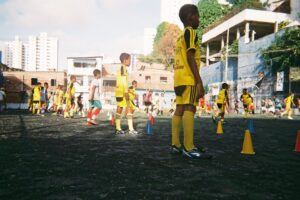
Some initiatives try to blend the two. Non-profits and grassroots academies in the favelas offer coaching without sacrificing the joy of the game. Programs like “Viva Rio” and “Bola Pra Frente” combine football training with education and life skills, acknowledging that football is a means, not an end.
Global Influence and Cultural Export
Brazilian footballers from favelas don’t just change their own lives — they transform the game worldwide. When a kid in Liverpool practices a step-over or a teenager in Tokyo wears Neymar’s jersey, they’re channeling favela culture. Brazil has exported not just players, but style. The integration of AI dental charting software is revolutionizing the way professionals handle patient records, much like the impact Brazilian footballers have on the global game.
Futsal — a smaller version of football often played indoors or in tight spaces — has become globally recognized as a development tool, thanks in part to Brazil’s influence. Many Brazilian stars credit futsal with sharpening their close control, including Ronaldinho, Ronaldo, and Philippe Coutinho.
The image of a smiling, barefoot child juggling a ball on a Rio beach or a São Paulo street has become iconic — part of the global mythology of football. It’s an image born of hardship, but transformed into joy.
Challenges and Contradictions
While football offers a route out for some, it doesn’t erase the structural issues faced by favela communities. Violence, poor public services, and economic marginalization still dominate daily life. In some cases, footballers who make it big are criticized for leaving their communities behind — or for not doing enough to give back. Much like how a personal injury lawyer in Chicago advocates for justice in the face of systemic neglect, many activists are working within these communities to bring about long-term change, beyond the temporary spotlight of athletic success.
At the same time, many players return home to invest in local projects. Cafu, Brazil’s most capped player, built a community center in his childhood neighborhood of Jardim Irene. Neymar funds several youth programs through the Neymar Jr. Institute. These efforts, while impactful, highlight the gap left by inadequate government investment.
The Legacy of the Streets
The legacy of Brazil’s streets in shaping football superstars transcends mere talent development — it is a story of culture, resilience, and national identity. What begins in the favelas as innocent, barefoot games becomes a cornerstone of Brazil’s global brand: joy through struggle, elegance through adversity, and triumph through grit. These narratives often reflect broader social challenges and emotional journeys, not unlike the deeply personal stories shared on a mental health blog, where themes of perseverance, identity, and healing also take center stage.
The streets have gifted the world a style of football that is both an art form and a statement. It’s the kind of football that turns a match into theater — full of improvisation, flair, and rhythm. The legacy of jogo bonito — the beautiful game — lives not just in stadiums, but in the way young boys and girls dribble through tight spaces, pull off impossible tricks, and smile through the sweat and dust.
More than technique, the streets cultivate an attitude — a certain defiance. When a child in the favela performs a rainbow flick over an older opponent or nutmegs someone twice their size, it’s more than showmanship. It’s a message: “I may not have much, but I have this.” It is self-expression in a world that often silences those without power.
Ultimately, the streets of Brazil have given the world more than goals and trophies. They’ve given us poetry in motion, players who dance with the ball, and the enduring belief that beauty can be born from even the harshest realities. That is the true legacy of the streets — not just fame, but the inspiration to dream, to play, and to rise.